Generator installation in Fort Myers is the project everyone means to get done before hurricane season, and too many of us schedule it after the first outage of the year. When the grid goes down in July, the AC stops, the fridge warms up, and every installer in Lee County books out at once.
This guide walks through why backup power takes more planning in Southwest Florida than most places, the difference between standby and portable setups, how installation actually works, and what drives the price.
Why Backup Power Takes More Planning in Southwest Florida
Hurricane season runs June 1 through November 30, and the outages that follow a storm here are rarely quick flickers. After a major storm, parts of Fort Myers, Cape Coral, and Lehigh Acres have waited days for restoration. That part is easy to understand. The details are harder.
Sizing comes first
Central air is the largest load in almost every Southwest Florida home, and a system that has to start a 4 ton condenser needs far more capacity than one that just runs lights and a refrigerator. Undersize the unit and it trips the moment the AC kicks on.
Fuel is the fork in the road
Natural gas service is limited in much of Lee County, so many standby installations run on propane, which means a tank, a site plan, and a delivery schedule.
Permits, placement, and salt air
County permits and inspections, setback rules for where the unit can sit, and salt air that corrodes unprotected hardware near the coast all shape the job. None of this is a reason to skip backup power. It is the reason to plan it instead of panic buying it.
Standby vs Portable: Generator Installation in Fort Myers Homes
There are two main paths, plus a quieter third option.
1. Whole-home standby
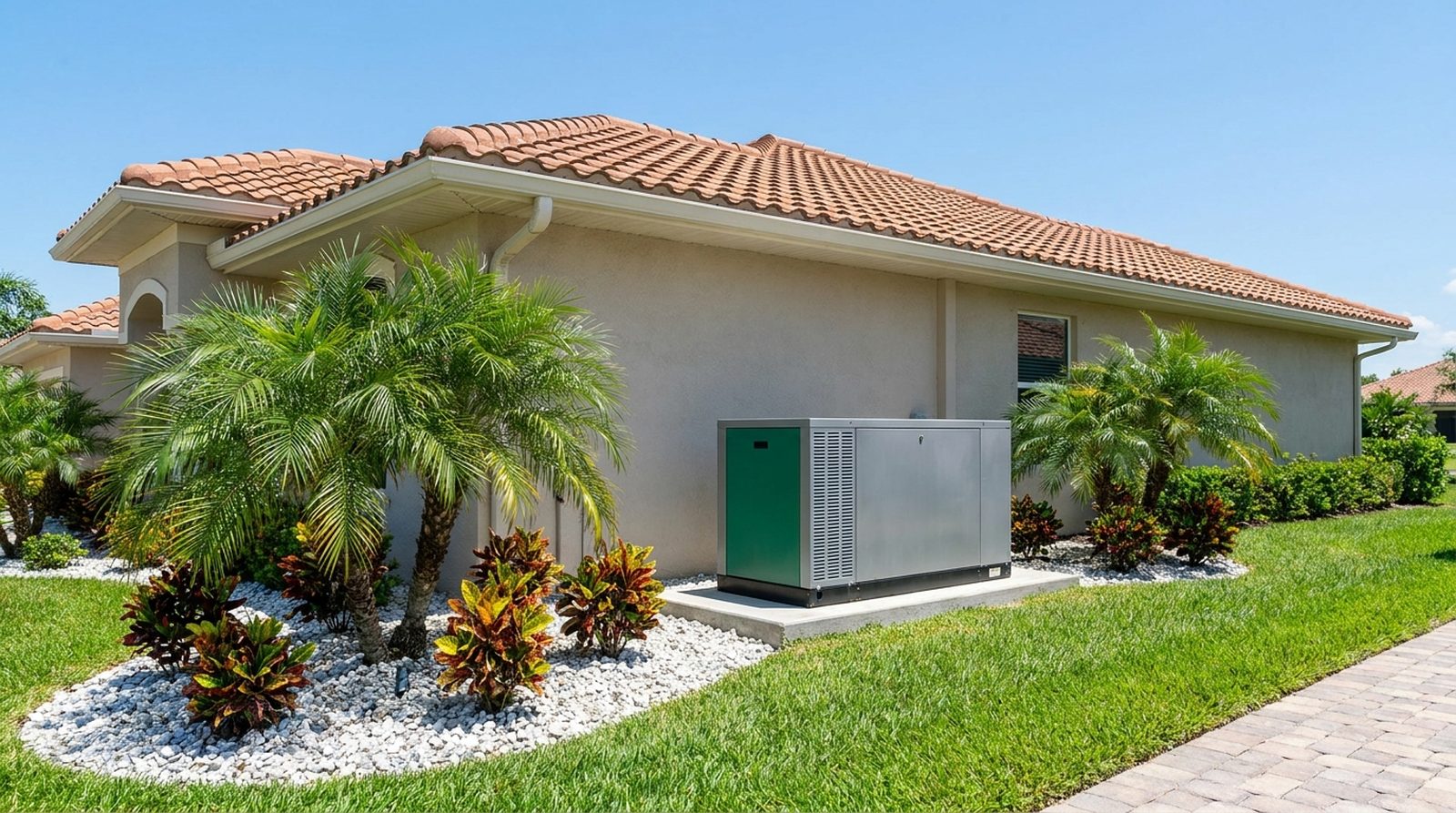
A permanently installed unit, usually a Generac, sits on a pad beside the house and starts itself within seconds of an outage. An automatic transfer switch moves the house onto generator power and back when the grid returns. It runs on natural gas or propane, so there are no gas cans involved.
2. Portable with a transfer switch
A licensed electrician installs an inlet box and a manual transfer switch, and you roll the generator out when a storm is coming. It costs far less up front and keeps the essentials running: refrigerator, some lights, fans or a window unit.
3. Battery backup
Systems like EcoFlow store power silently, with no fuel and no exhaust. Home battery backup handles shorter outages on its own and pairs well with a generator for longer ones.
How the Installation Process Works
- Free on-site assessment. A licensed electrician walks the property, runs a load calculation, checks the panel, and gives you a written estimate. There is no charge for this.
- Permits and paperwork. JMW handles the Lee County or Charlotte County permit and the drawings that go with it.
- Site prep and installation. The pad goes in, gas is connected, and the transfer switch is wired to the panel to NEC code.
- Inspection and startup. The county inspects, the unit gets a test run, and you get a walkthrough of how it behaves during an outage.
- Maintenance. Standby units exercise themselves weekly. Plan on oil changes, battery checks, and a service visit after any storm that runs the unit hard.
Most of the electrical work is done in a day. Propane and permitting add lead time, which is one more reason to start before a storm has a name.
What Generator Installation Costs
Prices vary with the home, so think in tiers rather than a single number.
- Portable inlet and transfer switch. The least expensive path. You supply the generator, we install the connection that makes it safe.
- Partial-home standby. A smaller standby unit covering the essentials: refrigerator, lights, outlets, and AC on a managed load.
- Whole-home standby. Everything runs, sized to start your AC and carry the whole panel, often with a propane tank included in the project.
The cost drivers are unit size in kilowatts, how far the gas line has to run, the condition of your electrical panel, and whether a tank is part of the job. Older panels sometimes need an electrical panel upgrade before a transfer switch can go in. Financing is available, and a written estimate up front means the number does not move on you.
Why Fort Myers Homeowners Choose JMW Electric
JMW Electric is a certified Generac installer for generator installation, and a veteran and family owned company based in Fort Myers, licensed and insured under EC13015743. The person who sizes your generator is a licensed electrician, not a salesman working a commission sheet. Discounts apply for veterans, teachers, and first responders, and we stand behind the work after the inspection sticker goes on.
One thing worth pairing with backup power: when the grid comes back after an outage, it often comes back with a spike. Whole-home surge protection at the panel protects the electronics your generator just spent days keeping alive.
Get a Free Generator Estimate
If you want backup power in place before the next storm has a name, start with a free on-site assessment. Request a free estimate online, or call or text (239) 202-1333. The phone is answered 24/7, and we serve Fort Myers, Cape Coral, Lehigh Acres, Estero, Bonita Springs, Naples, Punta Gorda, and Port Charlotte.
Our Services
Why JMW Electric
- Veteran & Family Owned
- Licensed & Insured (EC13015743)
- Certified Generac Installer
- Free On-Site Estimates
- Financing Available
- 24/7 Emergency Service
What Our Customers Say
Real reviews from homeowners and businesses across Fort Myers and Southwest Florida.